Getting the lasting support you need every step of the way
Eton Cares Program® - Your rare disease journey is personal. So is our support.
When your doctor prescribes DESMODA, you’re automatically enrolled in the Eton Cares Program®—designed to support you and your family every step of the way.
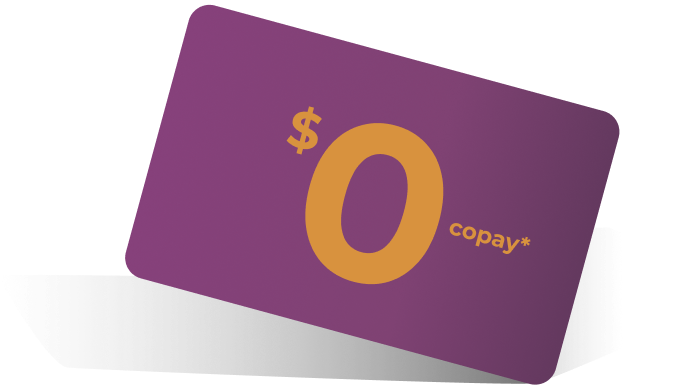
$0
monthly
copay*
*Restrictions, limitations, and/or eligibility requirements may apply.
When your doctor sends your prescription to our specialty pharmacy Anovo, this is what you can expect:
Welcome Call from your Care Coordinator to verify prescription, offer support, and answer questions
Medication Delivery with instructions and product-specific information
Insurance Verification to review coverage and benefits
Ongoing Pharmacy Support, including refill coordination, reminders, and 24/7 access to a pharmacist
Financial Assistance Review to explore copay programs and other support options
Nurse Ambassador Support to help you and your child stay on track with treatment, answer health or medication questions, and provide regular check-ins by phone
For questions or support, please contact us at our specialty pharmacy Anovo®:
Anovo Care Team:
1-833-343-2500
Monday-Friday
8:00 AM-5:00 PM CST
Anovo Pharmacy Team:
1-901-201-5470
The Pharmacy Team is always available by phone 24 hours a day, 365 days a year.

A helpful tip: We recommend saving Anovo’s phone number in your contacts so you can easily recognize important calls about your prescription, refills, or insurance updates.

Advocacy groups
Advocacy and education groups can help you and your child navigate central diabetes insipidus (CDI), also known as arginine vasopressin deficiency (AVP-D)

Histiocytosis Association
The Histiocytosis Association is relevant for patients with CDI caused by a histiocytic disorder.


Raymond A. Wood Foundation (RAWF)
RAWF focuses specifically on hypothalamic-pituitary brain tumors and the lifelong challenges survivors face, including CDI.
Worldwide Adrenal and Pituitary Organizations (WAPO)
WAPO is a global network of patient groups that connects individuals affected by adrenal and pituitary conditions, such as CDI, to education, support, and community worldwide.
Downloads
The resources below can give you helpful information about DESMODA
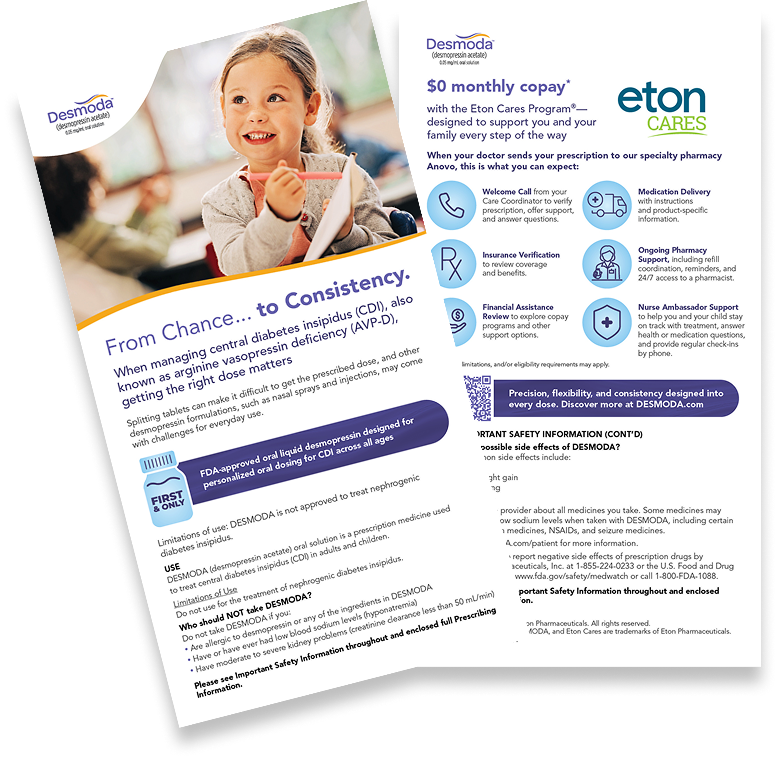
Patient Brochure
Explore this informative brochure about CDI and DESMODA.
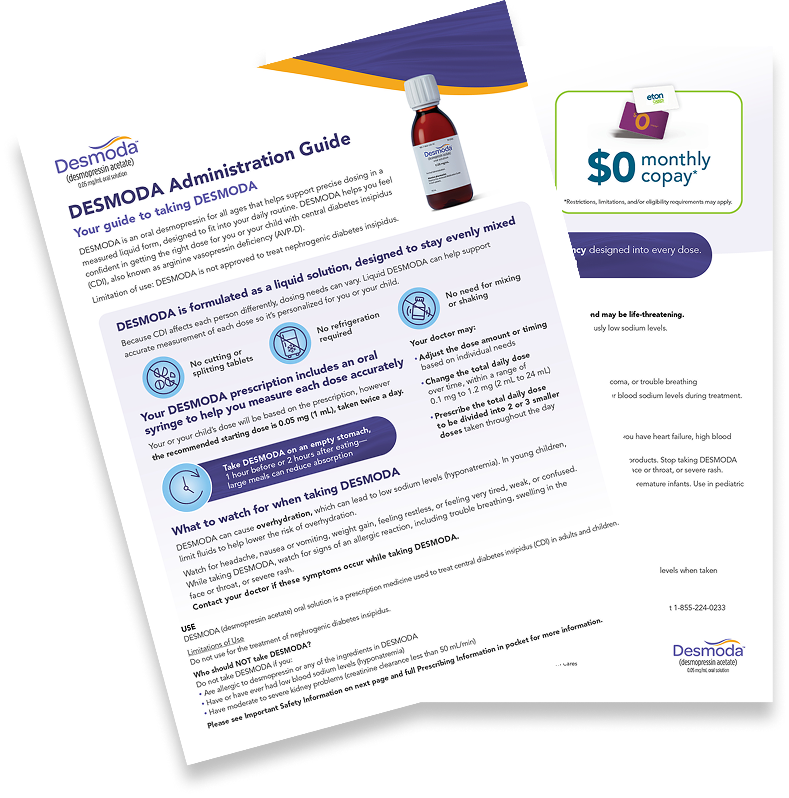
Administration Guide
Find useful information to help you take DESMODA.
Stay informed with the latest news and updates about Desmoda
USE AND IMPORTANT SAFETY INFORMATION
USE
DESMODA (desmopressin acetate) oral solution is a prescription medicine used to treat central diabetes insipidus (CDI) in adults and children.
Limitations of Use
Do not use DESMODA for the treatment of nephrogenic diabetes insipidus.
Who should NOT take DESMODA?
Do not take DESMODA if you:
- Have or have ever had low blood sodium levels (hyponatremia)
- Are allergic to desmopressin or any of the ingredients in DESMODA
- Have moderate to severe reduction in kidney function (creatinine clearance less than 50 mL/min)
IMPORTANT SAFETY INFORMATION
DESMODA can cause low blood sodium levels (hyponatremia), which can be serious and may be life-threatening.
Drinking too much fluid while taking DESMODA can lead to water intoxication and dangerously low sodium levels.
Symptoms of low blood sodium may include: headache, nausea or vomiting, weight gain, tiredness or weakness, confusion, muscle cramps or spasms. Severe symptoms may include seizures, coma, or trouble breathing. Your healthcare provider may recommend limiting how much fluid you drink and may monitor your blood sodium levels during treatment.
Children and older adults may be at higher risk of developing low sodium levels.
DESMODA may cause your body to hold onto (retain) fluid. Tell your healthcare provider if you have heart failure, high blood pressure, or swelling.
Serious allergic reactions, including fatal anaphylaxis, have occurred with desmopressin products. Stop taking DESMODA and seek emergency medical help if you develop symptoms such as trouble breathing, swelling of the face or throat, or severe rash.
DESMODA contains benzoic acid, which could potentially be harmful to low-birth-weight and preterm infants. Use in these patients requires careful monitoring and fluid restriction.
What are the possible side effects of DESMODA?
Other common side effects include GI upset, swelling, high blood pressure, nervous system disorders, and abnormal thinking.
Drug interactions
Tell your healthcare provider about all medicines you take. Some medicines may increase the risk of low sodium levels when taken with DESMODA, including certain antidepressants, pain medicines, NSAIDs, and seizure medicines. DESMODA can cause increased blood pressure. Talk to your doctor if you take other medicine that can raise blood pressure.
Please visit DESMODA.com for more information.
You are encouraged to report negative side effects of prescription drugs by contacting Eton Pharmaceuticals, Inc. at 1-855-224-0233 or the U.S. Food and Drug Administration (FDA) at https://www.fda.gov/safety/medwatch or call 1-800-FDA-1088.
Please see full Prescribing Information for more information.
USE AND IMPORTANT SAFETY INFORMATION
USE
DESMODA (desmopressin acetate) oral solution is a prescription medicine used to treat central diabetes insipidus (CDI) in adults and children.
Limitations of Use
Do not use DESMODA for the treatment of nephrogenic diabetes insipidus.
Who should NOT take DESMODA?
Do not take DESMODA if you:
- Have or have ever had low blood sodium levels (hyponatremia)
- Are allergic to desmopressin or any of the ingredients in DESMODA
- Have moderate to severe reduction in kidney function (creatinine clearance less than 50 mL/min)
IMPORTANT SAFETY INFORMATION
DESMODA can cause low blood sodium levels (hyponatremia), which can be serious and may be life-threatening.
Drinking too much fluid while taking DESMODA can lead to water intoxication and dangerously low sodium levels.
Symptoms of low blood sodium may include: headache, nausea or vomiting, weight gain, tiredness or weakness, confusion, muscle cramps or spasms. Severe symptoms may include seizures, coma, or trouble breathing. Your healthcare provider may recommend limiting how much fluid you drink and may monitor your blood sodium levels during treatment.
Children and older adults may be at higher risk of developing low sodium levels.
DESMODA may cause your body to hold onto (retain) fluid. Tell your healthcare provider if you have heart failure, high blood pressure, or swelling.
Serious allergic reactions, including fatal anaphylaxis, have occurred with desmopressin products. Stop taking DESMODA and seek emergency medical help if you develop symptoms such as trouble breathing, swelling of the face or throat, or severe rash.
DESMODA contains benzoic acid, which could potentially be harmful to low-birth-weight and preterm infants. Use in these patients requires careful monitoring and fluid restriction.
What are the possible side effects of DESMODA?
Other common side effects include GI upset, swelling, high blood pressure, nervous system disorders, and abnormal thinking.
Drug interactions
Tell your healthcare provider about all medicines you take. Some medicines may increase the risk of low sodium levels when taken with DESMODA, including certain antidepressants, pain medicines, NSAIDs, and seizure medicines. DESMODA can cause increased blood pressure. Talk to your doctor if you take other medicine that can raise blood pressure.
Please visit DESMODA.com for more information.
You are encouraged to report negative side effects of prescription drugs by contacting Eton Pharmaceuticals, Inc. at 1-855-224-0233 or the U.S. Food and Drug Administration (FDA) at https://www.fda.gov/safety/medwatch or call 1-800-FDA-1088.
Please see full Prescribing Information for more information.