From Probability...

to Precision.
The first and only FDA-approved oral desmopressin solution designed for precision in oral dosing for central diabetes insipidus (CDI)1*
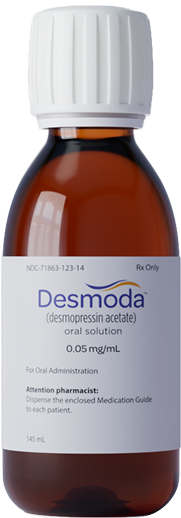

Limitations of Use: DESMODA is not indicated for the treatment of nephrogenic diabetes insipidus.1
*Desmopressin is also available in nasal and injectable dosage forms.
Living with CDI, also known as arginine vasopressin deficiency (AVP-D), can be challenging.2,3 Alternative formulations have important clinical limitations:
Splitting tablets to individualize dosing may lead to inconsistent, inaccurate doses4,5
Nasal sprays may deliver inconsistent doses if nasal congestion or inflammation is present6
Injections often require office visits, and may be associated with discomfort, needle fear, and injection site reactions7-10

For patients of all ages with CDI, DESMODA is designed to allow:
Precision
Helps deliver accurate, reproducible dosing every time1
Flexibility
Supports individualized dose adjustment using a precisely measured liquid formulation1
Consistency
Helps support a measured dose designed to be repeatable1
Control
Helps avoid the oral dosing variability associated with splitting tablets1,4,5
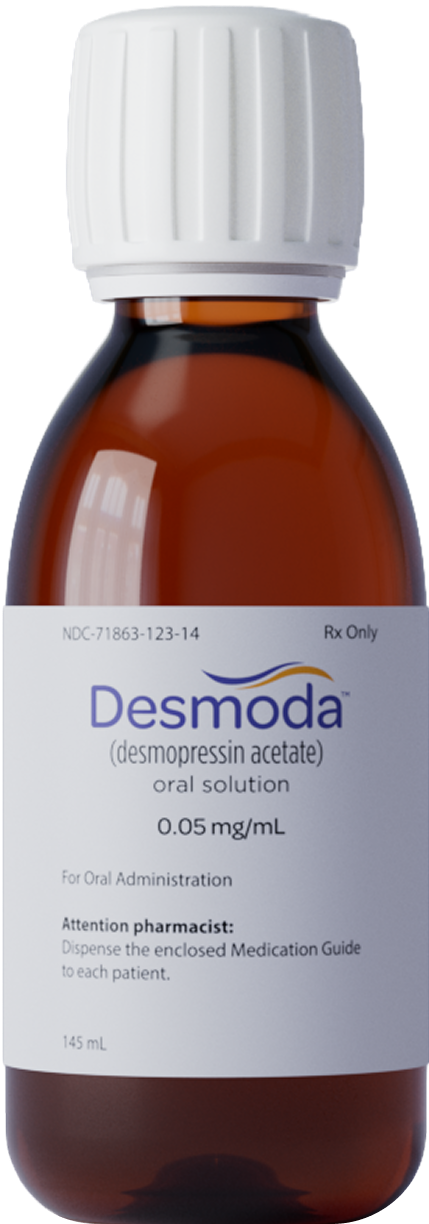
Learn more about DESMODA for CDI patients of all ages
Thanks for connecting with us.
References: 1. DESMODA. Package Insert. Eton Pharmaceuticals; 2026. 2. Arima H, Cheetham T, Christ-Crain M, et al. J Clin Endocrinol Metab. 2022;108(1):1-3. 3. Teare H, Argente J, Dattani M, et al. Orphanet J Rare Dis. 2022;17(1):58. 4. Verrue C, Mehuys E, Boussery K, Remon JP, Petrovic M. J Adv Nurs. 2011;67(1):26-32. 5. Saran AK, Holden NA, Garrison SR. BJGP Open. 2022;6(3):BJGPO.2022.0001. 6. Chin X, Teo SW, Lim ST, Ng YH, Han HC, Yap F. Eur J Clin Pharmacol. 2022;78(6):907-917. 7. Atila C, Refardt J, Christ-Crain M. Nat Rev Endocrinol. 2024;20(8):487-500. 8. Zhi L, Liu D, Shameem M. AAPS Open. 2025;11:5. 9. McLenon J, Rogers MAM. J Adv Nurs. 2019;75(1):30-42. 10. Centers for Disease Control and Prevention. CDC. August 9, 2024. Accessed February 2, 2026. https://www.cdc.gov/vaccines-children/before-during-after-shots/index.htm
USE AND IMPORTANT SAFETY INFORMATION
Use
DESMODA (desmopressin acetate) oral solution is a prescription medicine used to treat central diabetes insipidus (CDI) in adults and children.
Limitations of Use
Do not use for the treatment of nephrogenic diabetes insipidus
Who should NOT take DESMODA?
- Do not take DESMODA if you:
- Are allergic to desmopressin or any of the ingredients in DESMODA
- Have or have ever had low blood sodium levels (hyponatremia)
- Have moderate to severe kidney problems (creatinine clearance less than 50 mL/min)
IMPORTANT SAFETY INFORMATION
DESMODA can cause low blood sodium levels (hyponatremia), which can be serious and may be life-threatening.
Drinking too much fluid while taking DESMODA can lead to water intoxication and dangerously low sodium levels.
Symptoms of low blood sodium may include:
- Headache
- Nausea or vomiting
- Weight gain
- Tiredness or weakness
- Confusion or trouble thinking clearly
- Muscle cramps or spasms
- Restlessness or irritability
- Severe symptoms may include seizures, coma, or trouble breathing
Your healthcare provider may recommend limiting how much fluid you drink and may monitor your blood sodium levels during treatment.
Children and older adults may be at higher risk of developing low sodium levels.
IMPORTANT SAFETY INFORMATION
Fluid retention: DESMODA may cause your body to hold onto fluid. Tell your healthcare provider if you have heart failure, high blood pressure, or swelling.
Allergic reactions: Serious allergic reactions, including anaphylaxis, have occurred with desmopressin products. Stop taking DESMODA and seek emergency medical help if you develop symptoms such as trouble breathing, swelling of the face or throat, or severe rash.
Infants and young children: DESMODA contains benzoic acid, which can be harmful to newborns and premature infants. Use in pediatric patients requires careful monitoring and fluid restriction.
What are the possible side effects of DESMODA?
The most common side effects include:
- Diarrhea
- Swelling or weight gain
- Abnormal thinking
Drug interactions
Tell your healthcare provider about all medicines you take. Some medicines may increase the risk of low sodium levels when taken with DESMODA, including certain antidepressants, pain medicines, NSAIDs, and seizure medicines.
Please visit DESMODA.com/patient for more information.
You are encouraged to report negative side effects of prescription drugs by contacting Eton Pharmaceuticals, Inc. at 1-855-224-0233 nor the U.S. Food and Drug Administration (FDA) at www.fda.giv/safety/medwatch or call 1-800-FDA-1088.
Please see full Prescribing Information for more information.
USE AND IMPORTANT SAFETY INFORMATION
Use
DESMODA (desmopressin acetate) oral solution is a prescription medicine used to treat central diabetes insipidus (CDI) in adults and children.
Limitations of Use
Do not use for the treatment of nephrogenic diabetes insipidus
Who should NOT take DESMODA?
- Do not take DESMODA if you:
- Are allergic to desmopressin or any of the ingredients in DESMODA
- Have or have ever had low blood sodium levels (hyponatremia)
- Have moderate to severe kidney problems (creatinine clearance less than 50 mL/min)
IMPORTANT SAFETY INFORMATION
DESMODA can cause low blood sodium levels (hyponatremia), which can be serious and may be life-threatening.
Drinking too much fluid while taking DESMODA can lead to water intoxication and dangerously low sodium levels.
Symptoms of low blood sodium may include:
- Headache
- Nausea or vomiting
- Weight gain
- Tiredness or weakness
- Confusion or trouble thinking clearly
- Muscle cramps or spasms
- Restlessness or irritability
- Severe symptoms may include seizures, coma, or trouble breathing
Your healthcare provider may recommend limiting how much fluid you drink and may monitor your blood sodium levels during treatment.
Children and older adults may be at higher risk of developing low sodium levels.
IMPORTANT SAFETY INFORMATION
Fluid retention: DESMODA may cause your body to hold onto fluid. Tell your healthcare provider if you have heart failure, high blood pressure, or swelling.
Allergic reactions: Serious allergic reactions, including anaphylaxis, have occurred with desmopressin products. Stop taking DESMODA and seek emergency medical help if you develop symptoms such as trouble breathing, swelling of the face or throat, or severe rash.
Infants and young children: DESMODA contains benzoic acid, which can be harmful to newborns and premature infants. Use in pediatric patients requires careful monitoring and fluid restriction.
What are the possible side effects of DESMODA?
The most common side effects include:
- Diarrhea
- Swelling or weight gain
- Abnormal thinking
Drug interactions
Tell your healthcare provider about all medicines you take. Some medicines may increase the risk of low sodium levels when taken with DESMODA, including certain antidepressants, pain medicines, NSAIDs, and seizure medicines.
Please visit DESMODA.com/patient for more information.
You are encouraged to report negative side effects of prescription drugs by contacting Eton Pharmaceuticals, Inc. at 1-855-224-0233 nor the U.S. Food and Drug Administration (FDA) at www.fda.giv/safety/medwatch or call 1-800-FDA-1088.
Please see full Prescribing Information for more information.